
That clicking sound when you open your mouth to yawn isn’t just annoying—it’s your jaw telling you something’s wrong. TMJ disorders can turn simple activities like chewing breakfast or laughing with friends into painful reminders that your jaw joint isn’t working right. While many people reach for pain pills or mouth guards that only cover up the problem, tmj acupuncture takes a different approach by treating the root cause of jaw tension and inflammation.
Table of Contents
Understanding TMJ Disorders
About 12% of Americans deal with jaw pain at any given time, and many don’t realize it’s connected to their temporomandibular joint. TMJ stands for temporomandibular joint disorder, which affects the hinge connecting your jaw to your skull. This joint gets used thousands of times every day when you talk, chew, yawn, or even just rest your mouth. When something goes wrong with this joint, the pain and discomfort can spread far beyond just your jaw.
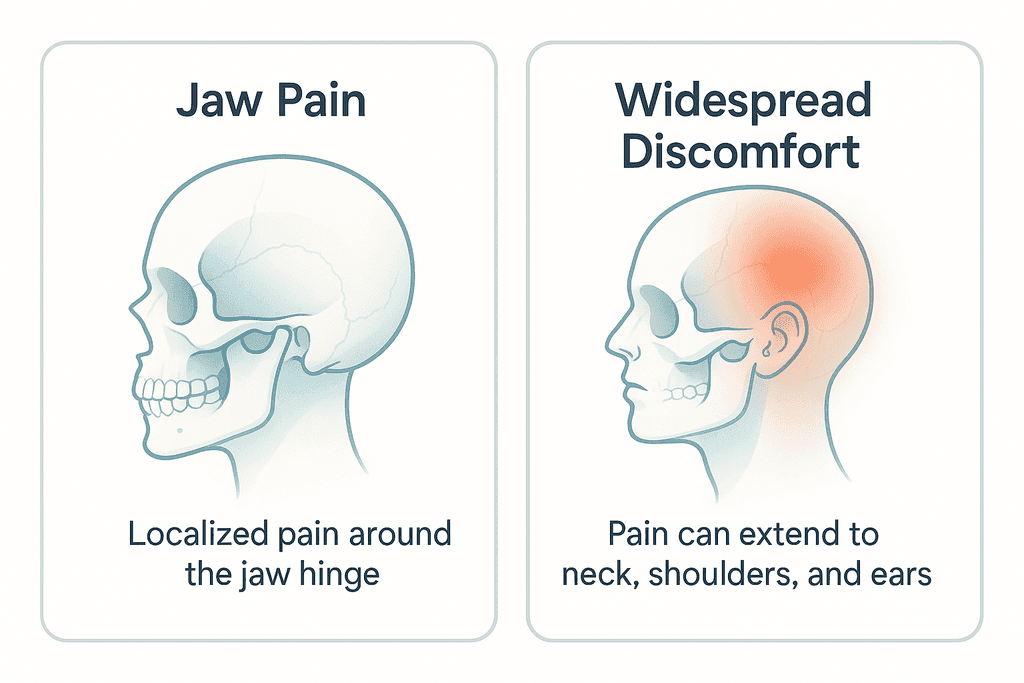
What TMJ Feels Like
The symptoms of TMJ disorders show up in different ways for different people. Some folks hear clicking or popping sounds every time they open their mouth, while others deal with constant aching pain that makes eating difficult.
Here are the most common signs you might have TMJ:
- Pain or tenderness in your jaw, especially when chewing
- Aching pain around your ear that doesn’t seem to be an ear infection
- Difficulty opening or closing your mouth all the way
- Clicking, popping, or grinding sounds when you move your jaw
- A feeling like your jaw gets stuck or locked in place
Many people also experience headaches, neck pain, and even dizziness. The pain can be so distracting that it affects your sleep and daily activities.
| Symptom | Percentage of TMJ Patients |
|---|---|
| Jaw pain or tenderness | 85-90% |
| Clicking or popping sounds | 65-75% |
| Headaches | 55-70% |
| Limited jaw movement | 45-60% |
| Ear pain or fullness | 40-50% |
Why TMJ Happens
Stress is one of the biggest culprits behind TMJ disorders, causing people to clench their jaw or grind their teeth without even realizing it. This constant tension wears down the joint over time and creates inflammation.
Other common causes include:
- Teeth grinding during sleep (bruxism)
- Arthritis in the jaw joint
- Injury or trauma to the jaw or head
- Poor posture that strains neck and jaw muscles
Sometimes the cartilage disk that cushions the joint can slip out of place. Other times, the muscles around your jaw just get overworked and tired from constant tension.
Traditional Treatment Approaches
Most doctors start with conservative treatments when you come in with jaw pain. They might prescribe pain medication or muscle relaxers to help manage the discomfort. Many dentists recommend wearing a mouth guard at night to prevent teeth grinding.
Common traditional treatments include:
- Over-the-counter pain relievers like ibuprofen
- Custom-fitted mouth guards or splints
- Physical therapy exercises for the jaw
- Heat or ice packs applied to the affected area
- Stress management techniques
While these approaches can help, they often just manage symptoms rather than addressing the root cause. That’s where tmj acupuncture comes in as an alternative treatment option that many Boulder residents are exploring. Research published in Healthcare journal shows promising results for electroacupuncture in treating temporomandibular disorders. At Boulder Dynamic Acupuncture, we’ve seen how targeted acupuncture treatments can help release the muscle tension and reduce inflammation that contributes to TMJ pain.
How Acupuncture Addresses TMJ Pain
About 12% of Americans deal with TMJ disorders at some point in their lives, and many of them struggle to find lasting relief. The pain can show up as jaw clicking, headaches, or that annoying ache that makes eating a sandwich feel like a workout. What most people don’t realize is that TMJ pain often stems from tension patterns that spread far beyond just the jaw itself. This is where acupuncture comes in, working with your body’s natural systems to address both the symptoms and the underlying causes.
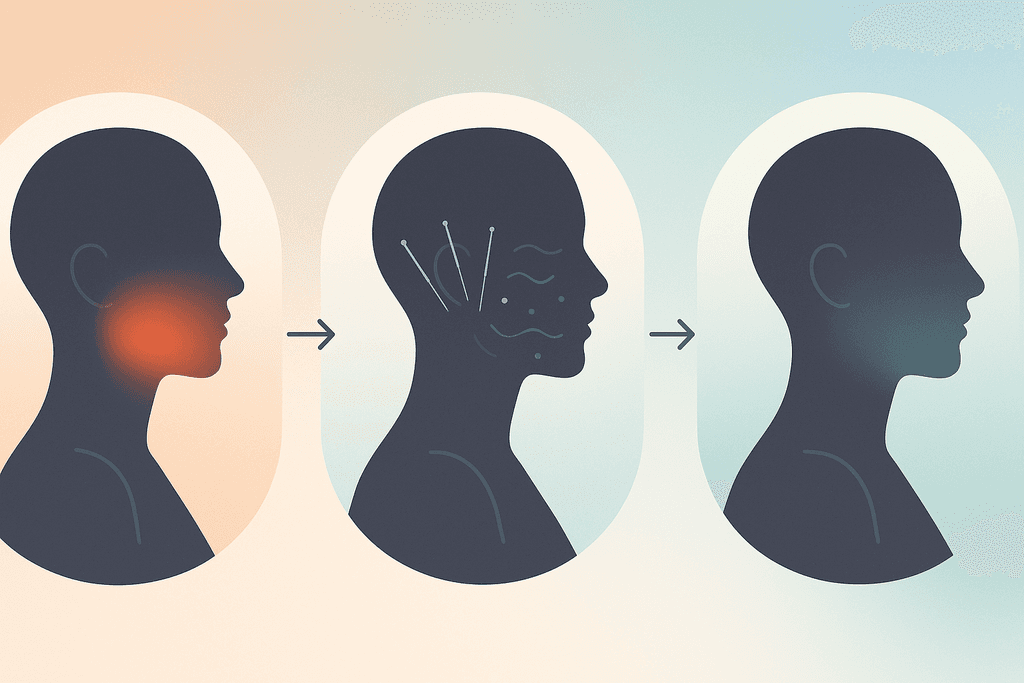
How Acupuncture Addresses TMJ Pain
Acupuncture for TMJ works by targeting specific points around your jaw, face, neck, and even areas that might surprise you like your hands and feet. These points aren’t random. They follow pathways in your body where energy and blood flow can get stuck, leading to inflammation and muscle tension in the temporomandibular joint.
- Reduces inflammation in the joint itself, which is often the source of that deep, persistent ache
- Releases muscle tension in the masseter, temporalis, and other jaw muscles that clench without you even noticing
- Improves blood flow to the area, bringing fresh oxygen and nutrients that help tissues heal
- Addresses neck and shoulder tension that contributes to jaw problems (your body is all connected)
- Calms the nervous system, which is crucial since stress often makes TMJ symptoms worse
The needles themselves are hair-thin and work by sending signals to your nervous system. Research published in the National Institutes of Health shows that acupuncture can significantly reduce pain intensity in TMJ disorders. When a needle is placed at the right spot, it triggers your body’s natural pain-relief mechanisms and helps reset those overactive muscles that have been working overtime.
What to Expect During TMJ Acupuncture Sessions
Walking into your first TMJ acupuncture appointment might feel a bit uncertain, but knowing what happens can help ease those nerves. The initial consultation is where the real detective work begins. Your practitioner will ask about your jaw movement, when the pain started, what makes it worse, and even things like your stress levels and sleep habits. They might gently press around your jaw and neck to feel where the tension lives. This isn’t just small talk, it’s about understanding your unique pattern of symptoms so the treatment can be tailored specifically to you.
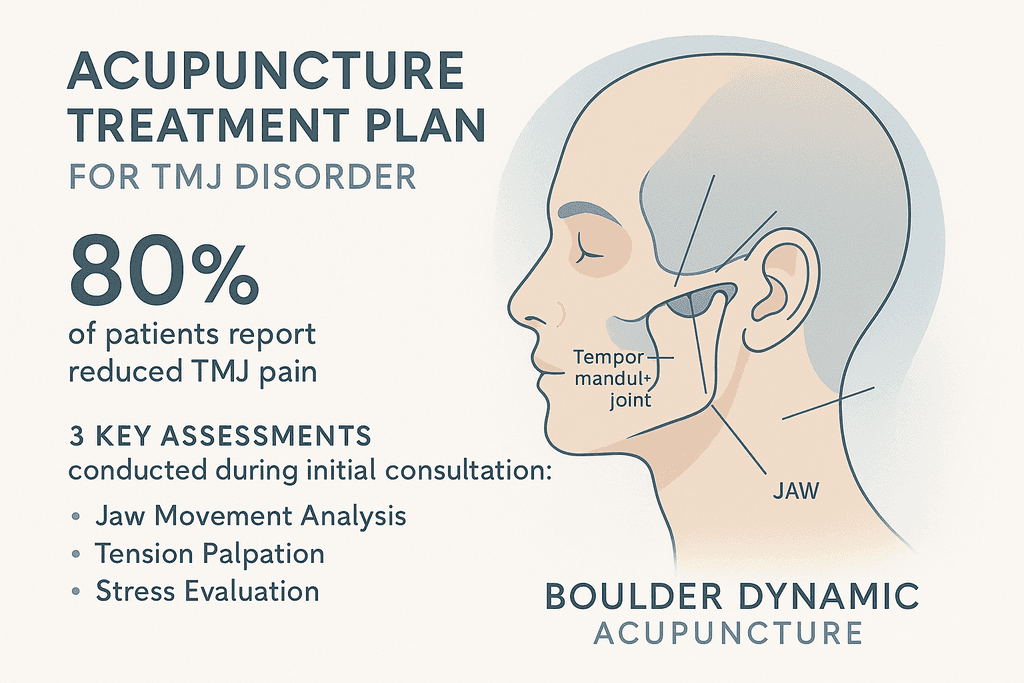
What to Expect During TMJ Acupuncture Sessions
During the actual treatment, you’ll typically have 8-12 needles placed strategically around your body. Some go near the jaw and face, others might be in your neck, shoulders, hands, or legs. At Boulder Dynamic Acupuncture, we use tools like amethyst heating pads to help you relax even more during the session. The whole appointment usually lasts 45-60 minutes, with the needles staying in place for about 20-30 minutes.
Here’s what a typical treatment timeline looks like:
- Initial assessment and discussion of your symptoms (10-15 minutes)
- Needle placement at specific points (5-10 minutes)
- Rest period with needles in place (20-30 minutes)
- Needle removal and post-treatment discussion (5 minutes)
Most people are surprised by how relaxing the experience actually is. Many patients fall asleep during treatment, which is completely normal and actually a good sign that your nervous system is shifting into healing mode. The needles don’t hurt the way you might expect. There’s sometimes a brief pinch or a dull, achy sensation that fades quickly. For TMJ specifically, treatment plans typically involve weekly sessions for 4-8 weeks, though some people start noticing changes sooner than that.
What to bring to your first session:
- A list of any medications or supplements you’re taking
- Notes about when your TMJ pain is worst and what triggers it
- Comfortable, loose-fitting clothing
- An open mind about the process
Real Results from TMJ Acupuncture in Boulder
Boulder has a unique approach to healthcare that blends evidence-based Western medicine with Traditional Chinese Medicine, and this combination works particularly well for TMJ treatment. Practitioners here don’t just stick needles in and hope for the best. They understand the anatomy of the temporomandibular joint from a Western perspective while also working with the energy pathways that Chinese medicine has mapped out over thousands of years. This dual understanding means treatments address both the physical mechanics and the deeper patterns that keep TMJ pain coming back.
The results speak for themselves. Many patients report feeling a reduction in pain within their first 3-4 sessions. But here’s what matters more than quick relief: documented case studies show that addressing root causes like chronic stress and muscle tension patterns leads to long-term improvement rather than just temporary fixes. This is where personalized treatment plans make all the difference.
What makes Boulder’s approach different:
- Practitioners who combine Western anatomical knowledge with Traditional Chinese Medicine principles
- Treatment plans customized to your specific triggers, whether that’s stress, teeth grinding, or postural issues
- Focus on whole-body healing rather than just symptom management
- Integration of additional therapies like heat treatment and herbal support when needed
At Boulder Dynamic Acupuncture, Brooks Davis brings over a decade of experience as both a Western herbalist and former massage therapist to his TMJ treatments. Having used acupuncture to treat his own pain issues, he understands what you’re going through from the inside. That personal experience translates into treatments that feel more intuitive and responsive to what your body actually needs. The amethyst heating pads and calming environment help you forget about any needle anxiety and focus on healing instead.
The goal isn’t just to help you cope with TMJ pain. It’s to help you get back to eating, talking, and living without that constant awareness of your jaw. When treatment addresses the muscle tension, inflammation, and stress patterns all together, that’s when people start to feel like themselves again.
Why Acupuncture Works Better Than Quick Fixes
Most people with TMJ pain end up bouncing between temporary solutions that never really fix the problem. You take ibuprofen, the pain goes away for a few hours, then comes roaring back. You get fitted for a mouth guard, which might stop you from grinding your teeth at night, but your jaw still aches all day. The truth is that these common treatments only address surface-level symptoms while the real issues keep building underneath. TMJ acupuncture takes a completely different approach by treating the whole person, not just the clicking jaw or sore muscles.
How Traditional Treatments Fall Short
Pain medications might seem like the easiest option when your jaw hurts so bad you can barely chew. But here’s what most doctors won’t tell you upfront: those pills are just covering up the pain signals without doing anything to heal the joint itself. Your body is still dealing with inflammation, muscle tension, and misalignment.
- NSAIDs and pain relievers only mask symptoms for 4-6 hours
- Long-term medication use can cause stomach issues and liver damage
- Muscle relaxants make you drowsy without addressing why muscles are tense
- None of these options reduce the stress that triggers jaw clenching
Mouth guards serve a purpose, but they’re basically damage control. They protect your teeth from grinding, which is good, but they don’t stop the grinding itself or release the tight muscles causing your pain.
The Whole Person Approach
| Treatment Type | What It Addresses | Duration of Relief | Side Effects |
|---|---|---|---|
| Pain Medications | Pain signals only | 4-6 hours | Stomach, liver issues |
| Mouth Guards | Teeth grinding | While wearing | Jaw soreness |
| TMJ Acupuncture | Pain, stress, inflammation | Cumulative improvement | None |
At Boulder Dynamic Acupuncture, we’ve seen how treating TMJ means looking at the bigger picture. Your jaw tension might be connected to stress at work, poor sleep, or digestive issues that keep your nervous system on high alert. Research shows that acupuncture effectively reduces myofascial pain in TMJ disorders by addressing multiple factors at once.
- Releases tight muscles in the jaw, neck, and shoulders
- Calms the nervous system to reduce stress-related clenching
- Decreases inflammation without medication
- Improves sleep quality so your body can heal
- Works alongside physical therapy or dental treatments
The best part about acupuncture for TMJ is that it actually gets better over time instead of requiring higher doses or more frequent use. Most people notice their pain decreasing and their jaw moving more freely after just a few sessions, with results that last longer each time.
Your Path to Jaw Relief Starts Here
TMJ pain affects everything from how you eat to how you sleep, but it doesn’t have to run your life. The good news is that tmj acupuncture offers a natural way to address the root causes instead of just covering up symptoms. Unlike medications that might only mask the discomfort, acupuncture works with your body’s own healing systems to reduce inflammation, relax tight muscles, and restore balance to the jaw area.
At Boulder Dynamic Acupuncture, we’ve seen how personalized treatment makes all the difference. Brooks Davis brings over a decade of experience treating pain conditions, including his own jaw and digestive issues, which means he understands what you’re going through firsthand. Each session is tailored to your specific TMJ symptoms, whether that’s clicking, grinding, headaches, or difficulty opening your mouth.
The first step is simple: schedule a consultation where we can assess your jaw tension, discuss what’s been triggering your symptoms, and create a treatment plan that fits your needs. We’ll explain everything during your visit, so you know exactly what to expect.
You can reach us at 720-340-1669 or email boulderdynamicacu@gmail.com to book your appointment. Our office is located at 3195 Pearl Pkwy in Boulder, making it easy to fit treatment into your schedule. Most people start noticing changes within a few sessions, though everyone’s timeline looks a bit different.
If you’ve been dealing with jaw pain for months or even years, you probably have questions about how tmj acupuncture actually works and what to expect during treatment.
Common Questions About TMJ Acupuncture
If you’re dealing with jaw pain and considering acupuncture, you probably have some questions about what to expect. TMJ issues can be frustrating, and finding the right treatment approach matters. Here are the most common questions people ask about tmj acupuncture before their first visit.
Does acupuncture hurt for TMJ treatment?
Most people feel little to no pain during tmj acupuncture sessions. The needles used are incredibly thin, about the width of a human hair, so insertion typically feels like a tiny pinch or mosquito bite at most. Some people don’t feel the needles at all. At Boulder Dynamic Acupuncture, we use an amethyst heating pad and create a calming environment to help you relax completely during treatment.
How many sessions are needed for TMJ relief?
The number of sessions varies based on how long you’ve had TMJ issues and how severe your symptoms are. Many people notice some improvement after just one or two sessions, but lasting relief usually takes between 6 to 12 treatments. Chronic TMJ problems that have been around for years typically need more sessions than recent flare-ups. We’ll work with you to create a personalized treatment plan based on how your body responds.
Can acupuncture help with teeth grinding related to TMJ?
Yes, acupuncture can address both the physical tension and the stress that often causes teeth grinding. The treatment helps relax the jaw muscles directly while also calming your nervous system, which reduces the unconscious clenching that happens during sleep or stressful moments. Many clients report grinding less after starting regular tmj acupuncture sessions.
Is TMJ acupuncture covered by insurance?
Some insurance plans do cover acupuncture, but coverage varies widely between providers and specific plans. We recommend calling your insurance company directly to ask about acupuncture benefits for TMJ or jaw pain. You can reach us at 720-340-1669 to discuss payment options and we can provide documentation you might need for insurance reimbursement.
What should I do between acupuncture sessions?
Between sessions, avoid hard or chewy foods that stress your jaw, and try to notice when you’re clenching during the day. Gentle jaw stretches and applying warm compresses can help maintain the benefits of your treatment. We’ll give you specific recommendations based on your individual situation, but the key is being mindful of your jaw habits throughout the day.
How long do results last after treatment?
Results can last anywhere from several months to years, depending on what’s causing your TMJ issues and whether you address contributing factors like stress or posture. Some people need occasional maintenance sessions every few months, while others find their symptoms stay away for much longer. The good news is that acupuncture helps your body heal itself, so the improvements often build on each other over time.